
Yemen
Following nearly a decade of conflict, Yemen faces one of the worst humanitarian crises globally.
Years of conflict have devastated the country’s infrastructure and economy, leaving the population vulnerable to a cascade of emergencies.
Chronic food insecurity, mass displacement, a shattered healthcare system, and limited access to clean water and sanitation have left over 18 million Yemenis in need of urgent humanitarian support.
Food Insecurity
Yemen is facing catastrophic levels of food insecurity, with over 19 million people requiring immediate humanitarian assistance. The ongoing conflict has disrupted agricultural production and supply chains, leading to soaring food prices.
Water and Sanitation Crisis
The destruction of water infrastructure has forced communities to rely on contaminated sources, leading to frequent outbreaks of waterborne diseases. The lack of sanitation facilities in camps further exacerbates health risks for displaced families, particularly for children.
Collapsing Healthcare System
Hospitals in Yemen are extremely overwhelmed. The spread of preventable diseases such as cholera, dengue fever, and measles has compounded the suffering. Additionally, the lack of healthcare facilities means that pregnant women, infants, and those with chronic illnesses are especially vulnerable.

1989
Started work in Yemen
34M
Population
3
Active Programs
445,350
People impacted in 2024-25
Support our work in Yemen
IDRF’s Response in Yemen
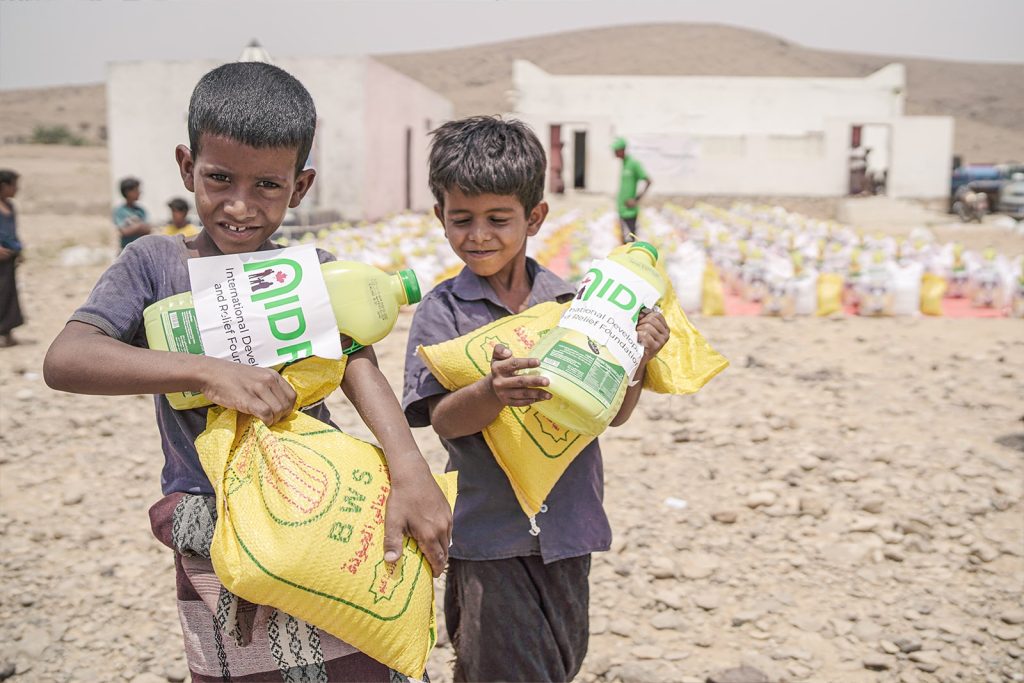
To address rising food insecurity in Aden, Lahj, Abyan, Shabwah, and Al Mukalla in Hadramawt, we’re delivering immediate food assistance to vulnerable families, helping stabilize nutrition and prevent further deterioration among internally displaced persons, women-headed households, young children, pregnant and lactating women, and the elderly.
To strengthen the livelihoods of local fishing communities, we’re providing hands-on training in modern, sustainable fishing practices and equipping fishermen with fuel-efficient boats, engines, and advanced navigation tools — improving safety, productivity, and long-term economic stability.