From a distance, Khartoum’s skyline appears recognizable. However, when you explore the city up close, the magnitude of the devastation is shocking and difficult to describe. Apartment blocks, government buildings, banks, hotels and universities, all symbols of this once vibrant capital of commerce and education, are either partially or entirely destroyed. Windows have been blown out, walls are scarred by gunfire, buildings have been burned from within, and shops have been emptied by looting. In some places, only concrete frames remain. Even the hotel where my team and I stayed showed visible damage from the fighting.
The city becomes stranger after sunset. Electricity remains unreliable across large parts of Khartoum, and at night our vehicle’s headlights would briefly illuminate damaged homes and abandoned buildings before they disappeared into darkness again. Streets that once belonged to one of Africa’s largest cities could feel almost deserted. What remains is the landscape of a capital that became one of the central battlefields of Sudan’s civil war.

Fighting broke out on April 15, 2023, between the Sudanese Armed Forces and the Rapid Support Forces (RSF), a powerful paramilitary group. The two forces had been uneasy partners after the 2019 overthrow of Omar al-Bashir and later joined in the 2021 coup that derailed Sudan’s transition toward civilian rule. Their alliance eventually fractured over control of the state and, in particular, over how and when the RSF would be integrated into the regular army. Those tensions erupted into open warfare, and Khartoum immediately became a battlefield. The RSF seized large parts of the capital and surrounding metropolitan area, while the army fought to dislodge it. Residential neighbourhoods became front lines, and artillery, air strikes and gunfire became part of daily life.
Millions of people fled their homes. Those who remained endured shortages of food, medicine, electricity and water, alongside the constant danger of the fighting itself. The war soon spread far beyond the capital, with some of its worst violence unfolding in Darfur, where communities that had already endured decades of conflict and atrocities were again subjected to devastating violence and mass displacement. Farmers fled their land, markets were disrupted, supply routes were severed, and entire communities were uprooted.
The Sudanese Armed Forces eventually retook Khartoum in 2025, but reclaiming a city militarily and restoring it are two very different things. What remained was a capital whose buildings still stood, but whose neighbourhoods, institutions and infrastructure had been profoundly damaged. Yet even amid that damage, signs of recovery were visible. Residents were returning home. Restaurants had reopened beside buildings blackened by fire. Merchants were reopening damaged shops, and families were moving back into neighbourhoods where electricity remained intermittent and public services limited. In conversations across the city, people spoke plainly about what they had endured. Khartoum had seen better days, several told us, but it would see better days again.

Those signs of recovery, however, sit alongside an immense humanitarian crisis. Behind the reopened shops and returning families is a country where hunger, displacement and the collapse of basic services continue to shape daily life. We saw this most clearly in the hospitals we visited. I saw infants and young children being treated for severe malnutrition, including those who had gone days without enough to eat. Elsewhere, patients were recovering from injuries caused by drone attacks. Doctors and nurses continued working despite shortages of medicine, damaged facilities and a health system that has repeatedly been caught in the war. In April 2026, the World Health Organization reported that 37 percent of health facilities across Sudan were non-functional. A month later, the World Food Programme, FAO and UNICEF estimated that nearly 19.5 million people, roughly two in every five Sudanese, were facing crisis levels of acute food insecurity or worse.

The damage was equally visible in many of Sudan’s schools. At one we visited, children’s shoes remained among the rubble. Snakes had begun moving through abandoned classrooms, while sunlight entered through holes left by gunfire in walls that had once enclosed ordinary school days. At a school serving children who are blind, staff told us that the country’s only Braille-printing machine had been damaged and that mobility canes had been stolen.

Across Khartoum, we heard similar stories of damage that went far beyond what could be seen from the street. Electrical wiring had been ripped from buildings. Expensive machinery had been dismantled so that small quantities of copper could be removed and sold. Equipment worth thousands of dollars could be destroyed in minutes so looters could sell the materials for a fraction of their original value.

Several hundred kilometres to the north, in Al Dabba in Sudan’s Northern State, the consequences of the war took another form. Here, the story was not primarily one of shattered buildings, but of people displaced far from the homes, communities and livelihoods that had once defined their lives. I travelled about five hours by road from Khartoum to displacement sites in Al Dabba, where thousands of Sudanese internally displaced persons (IDPs) are now living. These are not refugees who have crossed an international border; they are Sudanese families forced from their homes by war who remain displaced within their own country. Across Sudan, the International Organization for Migration estimated that 8.9 million people remained internally displaced as of late March 2026, including 4.9 million children.

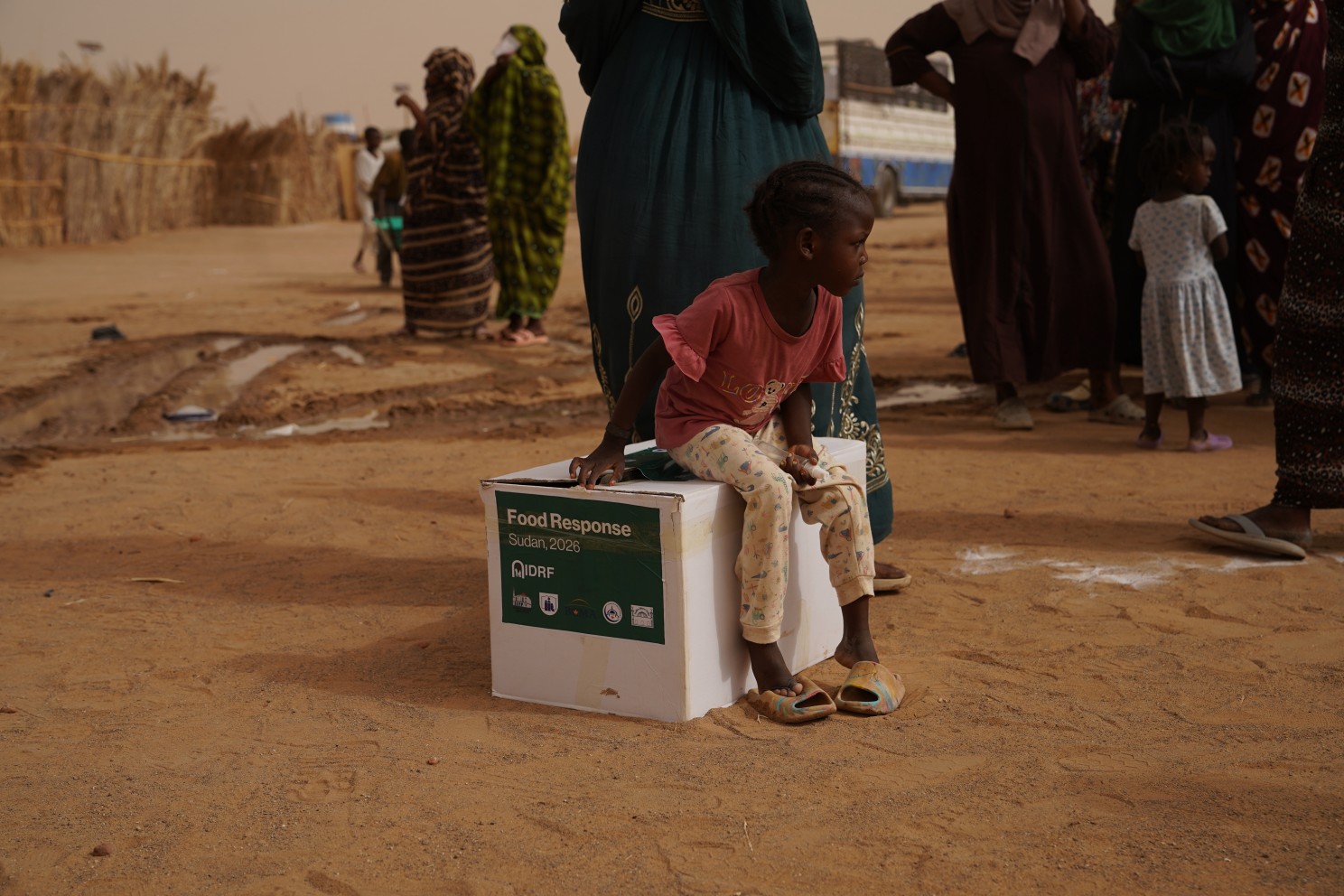
The site we visited was home to more than 20,000 people, many of them families who had fled violence in Darfur. They had travelled north because remaining at home was no longer safe, leaving behind houses, farms, livelihoods and, in many cases, relatives. Temperatures exceeded 40 degrees Celsius during our visit, and families were living in conditions that were never meant to become permanent. Food was scarce. Some people told us they had gone days without eating.

We distributed food to families in Al Dabba, and the immediate value of that assistance was obvious. So were its limits. Emergency relief can help a family eat today or get through the next difficult weeks, but it cannot restore a home, reopen a business, recover a lost harvest or return years of schooling to a child who has spent them displaced. For many of the people we met, the question was not only how to survive the present, but how long displacement would last and what kind of future remained if returning home was not yet possible. Humanitarian assistance is essential, but it cannot substitute for safety, recovery and a durable path out of displacement.
Along the eastern bank of the Nile, our local partner Sadaqaat took us to meet farmers whose land and livelihoods had been affected by the war. Among them was Hussein, whose farm became a place of refuge for displaced families during the fighting. When people arrived looking for safety, he opened his land to them, and families survived on the bananas, carrots, eggplants, okra and onions Hussein harvested.

Sadaqaat supported the farm’s rehabilitation, including installing a solar-powered pump that draws water from the Nile to irrigate the fields. Today, more than 300 farmers are working there, producing food, earning livelihoods and supporting their families. Hussein not only survived the war; he helped others survive it too.
Hussein’s story was not an exception to what we saw. Throughout our visit, teachers were returning to schools, doctors were working in damaged hospitals, humanitarian workers who had themselves been displaced were assisting families displaced more recently, businesses were reopening, and farmers were planting. Recovery in Sudan is rarely dramatic. Often it looks like a water pump working again, a farmer returning to his field, a shop reopening beneath a damaged facade or a family moving back into a neighbourhood where basic services remain unreliable. None of this diminishes what has happened to Sudan, nor should the determination of Sudanese people become a convenient reason for the international community to look elsewhere.
The humanitarian needs remain enormous. Millions of people require food, health care, shelter and protection. Communities need more than emergency relief; they need hospitals repaired, schools reopened, farms restored, businesses functioning and basic infrastructure rebuilt. Most of all, civilians need an end to a war that continues to produce suffering faster than humanitarian organizations can respond to it.

On our first nights in Khartoum, the city appeared almost completely dark. During the day, it looked different: traffic returned to the roads, shops opened beneath damaged buildings, families returned to their neighbourhoods, and people went about the difficult work of putting ordinary life back together. That may be the clearest impression Sudan left with me. The scale of the destruction is extraordinary, but so too is the determination not to let destruction have the final word.